
Plant Variety Guide
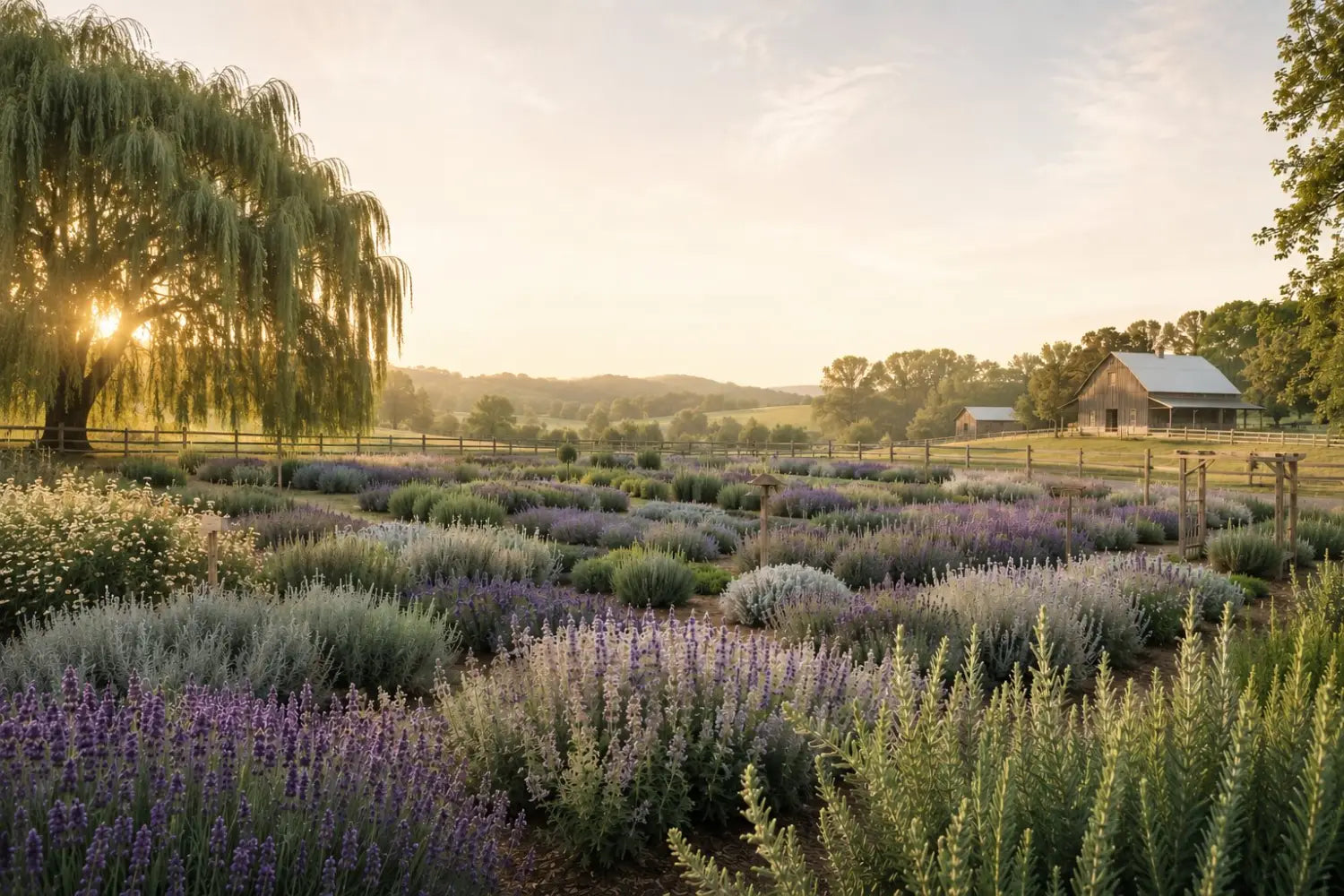
Every plant we grow has its own personality. Some have thrived in our rows; others have humbled us. Some we’re trying again next season with a different approach. This page is a working field guide — what’s currently growing, what’s earned its place, what hasn’t, and why. We update it as we learn.
The lavender below is organized by botanical species. Lavandula angustifolia is the classic English true lavender — finer, sweeter, the one most people picture, with the most refined oil. Lavandula × intermedia is lavandin — a sturdier, more productive hybrid with stronger projection and higher oil yield, the right choice for soaps, candles, and projects where the scent needs staying power. Each has its place.
Quick Reference
| Variety | Botanical | Best For |
|---|---|---|
| Buena Vista | L. angustifolia | Culinary buds, soaps, sachets |
| Big Time Blue | L. × intermedia | Bouquets, dried décor, sachets |
| Edelweiss | L. × intermedia | Dried buds, crafts, freshening mists |
| Ellagance Snow | L. angustifolia | White-themed bouquets, delicate body products |
| English Lavender | L. angustifolia (general) | Oils, soaps, skincare, bedtime blends |
| Folgate | L. angustifolia | Culinary (baking, syrups), perfumery |
| Gros Bleu | L. × intermedia | Oils, dried bouquets, statement arrangements |
| Grosso | L. × intermedia | Cleaning blends, room sprays, candle scenting |
| Melissa Lilac | L. angustifolia | Culinary buds, teas, soft sachets |
| Munstead | L. angustifolia | Everyday relaxation blends, bath products |
| Phenomenal | L. × intermedia | Bath/body, diffusers, landscaping (hardy in TN) |
| Platinum Blonde | L. angustifolia | Ornamental plantings, sachets, light blends |
| Provence | L. × intermedia | Linen sprays, diffuser blends, bath salts |
| Riverina Thomas | L. × intermedia | Oils, dried décor, ornamental bundles |
| Rosea | L. angustifolia | Garden ornamental, crafts, soft sachets |
| Royal Velvet | L. angustifolia | Bedtime blends, massage oils, culinary buds |
| Sensational | L. × intermedia | Oils, landscaping, diffuser blends |
| Super | L. × intermedia | Oils, sachets, soaps, candles (long-lasting) |
| Super Blue | L. angustifolia | Dried décor, crafts, gentle oils |
| Vera | L. angustifolia | Aromatherapy, culinary buds, perfumery |
| Rosemary Arp | Rosmarinus officinalis ‘Arp’ | Culinary, hardy landscape, infused oils (new 2026, winter-hardy) |
| Rosemary Blue Spires | Rosmarinus officinalis ‘Blue Spires’ | Culinary, ornamental, aromatherapy (new 2026, winter-hardy) |
| Tuscan Blue Rosemary | Rosmarinus officinalis | Culinary, infused oils, aromatherapy (high tunnel) |
Lavender Varieties
Twenty varieties currently in our fields, organized by botanical species — plus the two we tried and lost, honestly noted, because the field doesn’t lie.
True English Lavender (Lavandula angustifolia)
The sweet, refined lavender. Best for delicate oils, perfumery, culinary use, and gentle skincare. Top-to-middle scent profile. Eleven varieties currently in our rows.
Buena Vista
Botanical: Lavandula angustifolia
Aroma: Floral, sweet, slightly fruity
Note: Top to middle
Origin: Oregon, USA
Uses: Culinary buds, relaxing teas, soaps, sachets
Tips: Add late in cooking for delicate flavor
Safety: Gentle; dilute topically
Ellagance Snow
Botanical: Lavandula angustifolia
Aroma: Soft, floral, mild
Note: Top to middle
Origin: Netherlands
Uses: Ornamental borders, gentle sachets, delicate body products
Tips: Lovely in white-themed bouquets
Safety: Gentle; patch test for very sensitive skin
English Lavender (general)
Botanical: Lavandula angustifolia (general)
Aroma: Classic, sweet lavender
Note: Middle
Origin: Mediterranean (Spain, France, Italy, Balkans)
Uses: Oils, soaps, skincare toners, bedtime blends
Tips: Aromatherapy staple; blends well with cedarwood and bergamot
Safety: Generally gentle; dilute before skin use
Folgate
Botanical: Lavandula angustifolia
Aroma: Sweet, floral, slight citrus lift
Note: Top to middle
Origin: England (UK)
Uses: Culinary favorite (baking, syrups), sachets, perfumery
Tips: Excellent in lemon desserts and teas
Safety: Dilute topically; include allergen notice when culinary
Melissa Lilac
Botanical: Lavandula angustifolia
Aroma: Sweet, light lavender with lilac-like tones
Note: Top to middle
Origin: Oregon, USA
Uses: Culinary buds, teas, sachets, soft body products
Tips: Retains light pink blooms when dried
Safety: Gentle; dilute for topical use
Munstead
Botanical: Lavandula angustifolia
Aroma: Sweet, strong; cozy, slightly herbaceous base
Note: Middle to base
Origin: England (UK)
Uses: Everyday relaxation blends, bath products, gentle diffuser mixes
Tips: Hardy, early bloomer
Safety: Gentle; dilute for skin use
Platinum Blonde
Botanical: Lavandula angustifolia
Aroma: Sweet, fresh lavender with green undertones
Note: Middle
Origin: England (UK)
Uses: Decorative plantings, sachets, light fragrance blends
Tips: Variegated leaves add visual interest
Safety: Gentle; dilute if used in body products
Rosea
Botanical: Lavandula angustifolia
Aroma: Sweet, mild lavender
Note: Top to middle
Origin: Europe
Uses: Garden ornamental, crafts, softer sachets
Tips: Distinctive pink blooms; pretty mixed with white varieties
Safety: Gentle; patch test for very sensitive skin
Royal Velvet
Botanical: Lavandula angustifolia
Aroma: Rich, sweet, velvety classic lavender
Note: Middle
Origin: Oregon, USA
Uses: Bedtime blends, facial steams, massage oils, culinary buds
Tips: Pairs with cedarwood, frankincense, ylang ylang
Safety: Generally gentle; dilute topically
Super Blue
Botanical: Lavandula angustifolia
Aroma: Sweet, floral, true lavender
Note: Middle
Origin: Netherlands
Uses: Dried décor, crafts, gentle oils
Tips: Compact, colorful borders
Safety: Gentle; dilute for topical use
Vera
Botanical: Lavandula angustifolia
Aroma: Classic sweet lavender; true lavender
Note: Middle
Origin: Mediterranean (France/Italy/Spain)
Uses: Aromatherapy, culinary buds, traditional perfumery
Tips: Beautiful with bergamot or lemon for spa-fresh blends
Safety: Gentle; dilute before topical use
Lavandin / Hybrid (Lavandula × intermedia)
The robust hybrid. Higher oil yield, longer stems, stronger projection. Best for soaps, candles, room sprays, and cleaning blends where the scent needs staying power. Middle-to-base scent profile. Nine varieties currently in our rows.
Big Time Blue
Botanical: Lavandula × intermedia
Aroma: Strong, fresh lavender with classic herbal brightness
Note: Middle
Origin: Netherlands
Uses: Cut bundles, dried décor, sachets; holds color and scent well
Tips: Great for bouquets and displays; pairs with citrus for a clean vibe
Safety: Standard dilution; avoid direct facial application
Edelweiss
Botanical: Lavandula × intermedia
Aroma: Clean, bright lavender with crisp herbal edges
Note: Middle
Origin: Europe (Netherlands/Germany)
Uses: Dried buds, crafts, freshening mists
Tips: Retains white-tipped blooms when dried
Safety: Dilute for topical use; avoid sensitive facial skin
Gros Bleu
Botanical: Lavandula × intermedia
Aroma: Strong, sweet lavender with herbal tones
Note: Middle
Origin: France (Provence)
Uses: Oils, dried bouquets, sachets
Tips: Tall stems make striking arrangements
Safety: Avoid direct facial use; dilute well
Grosso
Botanical: Lavandula × intermedia
Aroma: Potent, camphoraceous lavender
Note: Middle to base
Origin: France (Provence)
Uses: Cleaning blends, room sprays, soaps/candles where staying power matters
Tips: Use lightly in face products due to strength
Safety: Higher camphor; avoid face/young children; always dilute
Phenomenal
Botanical: Lavandula × intermedia
Aroma: Strong, balanced floral-herbal
Note: Middle
Origin: Pennsylvania, USA
Uses: Bath/body products, diffusers, landscaping, dried décor
Tips: Very hardy hybrid — great in Tennessee climate
Safety: Considered skin-friendly; still dilute
Provence
Botanical: Lavandula × intermedia
Aroma: Sweet, floral; less camphoraceous than Grosso
Note: Middle
Origin: France (Provence)
Uses: Linen sprays, diffuser blends, bath salts, versatile oils
Tips: Beautiful with bergamot, vanilla, clary sage
Safety: Dilute before skin use
Riverina Thomas
Botanical: Lavandula × intermedia
Aroma: Floral, light, bright
Note: Top to middle
Origin: Australia (Riverina, NSW)
Uses: Oils, dried décor, ornamental bundles
Tips: Striking purple bundles
Safety: Gentle; dilute for skin use
Sensational
Botanical: Lavandula × intermedia
Aroma: Strong, fresh lavender
Note: Middle
Origin: Michigan, USA
Uses: Oils, landscaping, dried décor; great projection in diffusers
Tips: Long-lasting blooms; ideal for statement plantings
Safety: Dilute before topical use
Super
Botanical: Lavandula × intermedia
Aroma: Very strong, sweet lavender
Note: Middle to base
Origin: France (Provence)
Uses: Oils, sachets, soaps, candles where longevity matters
Tips: Known for great oil yield; use judiciously in blends
Safety: Higher strength; always dilute
Trialed and Lost
Tennessee humidity and winter have humbled us more than once. These two beautiful varieties survived a season, then died off. We’re not giving up on them — we’ll try again next year, this time on raised mounds for better drainage, and see if that’s what was missing.
Hidcote
Botanical: Lavandula angustifolia
Aroma: Sweet, deep, classic lavender with rich purple notes
Note: Middle
Origin: England (UK)
Uses: Compact ornamental borders, oils, sachets, traditional skincare
Our experience: Beloved in cooler climates. Twice we tried it; twice it survived a season then died off. Tennessee summer humidity, winter wet, or both. Planning another attempt next year on raised mounds.
Safety: Gentle when established; dilute topically
Maillette
Botanical: Lavandula angustifolia
Aroma: Soft, fruity-floral; perfumery-grade
Note: Middle
Origin: France (Provence)
Uses: Premium oils, perfume and high-end blends
Our experience: Prized worldwide for its refined fragrance. Same pattern as Hidcote — survived a season, then died off. Same plan: try again next year on raised mounds and see if drainage was the missing piece.
Safety: Gentle; patch test if very sensitive
Rosemary Varieties
Three rosemary varieties currently in our rows — two of them new this year. Tuscan Blue lives in our high tunnel because it isn’t winter hardy. We added Arp and Blue Spires specifically for their cold tolerance, so we’d have rosemary in the open rows that could weather a Tennessee winter.
Rosemary Arp
Botanical: Rosmarinus officinalis ‘Arp’ (also Salvia rosmarinus ‘Arp’)
Aroma: Fresh, herbal rosemary with a soft lemon lift
Note: Top to middle
Origin: Discovered in Arp, Texas, USA — named for the town
Uses: Culinary, infused oils, hardy landscape plantings
Our experience: One of the most cold-hardy rosemary cultivars known — survives well into USDA zone 6. New to our rows in 2026, planted specifically so we’d have rosemary that could weather Tennessee winters in the open field.
Safety: Avoid large internal amounts during pregnancy; not for infants; dilute topically
Rosemary Blue Spires
Botanical: Rosmarinus officinalis ‘Blue Spires’ (also Salvia rosmarinus ‘Blue Spires’)
Aroma: Strong, classic rosemary with a sweet, slightly resinous depth
Note: Top to middle
Origin: Hybrid cultivar, widely grown across Europe and the US
Uses: Culinary, ornamental (upright habit, vivid blue flowers), aromatherapy
Our experience: Cold-hardy down to zone 6–7 and beautifully upright in the field. New to our rows in 2026, planted alongside Arp as our winter-tolerant pair.
Safety: Avoid large internal amounts during pregnancy; not for infants; dilute topically
Tuscan Blue Rosemary
Botanical: Rosmarinus officinalis (also Salvia rosmarinus)
Aroma: Fresh, piney, herbal rosemary
Note: Top to middle
Origin: Italy (Tuscany)
Uses: Culinary, infused oils, aromatherapy blended with mint or citrus
Our experience: Not winter hardy here, so we raise her in our high tunnel — where she holds her own next to the lavender and produces beautifully for distillation, culinary, and aromatherapy use.
Safety: Avoid large internal amounts during pregnancy; not for infants; dilute topically
This page evolves as the farm evolves. New varieties join the list when they earn a place in our rows. Trial entries graduate when they prove themselves. And honest notes get updated when reality teaches us something new.
Curious to see what these plants become? Look through our essential oils, our farm blog, or come visit us.
All varieties listed here have traditional culinary, aromatic, and skincare uses. We share dilution and safety notes per variety, but this page is not medical advice. Always patch-test new botanicals on a small skin area first, and consult a healthcare provider if you have specific concerns about pregnancy, infants, or existing conditions.